Interesting Facts About Bronze Age Swords and Early Blade Design
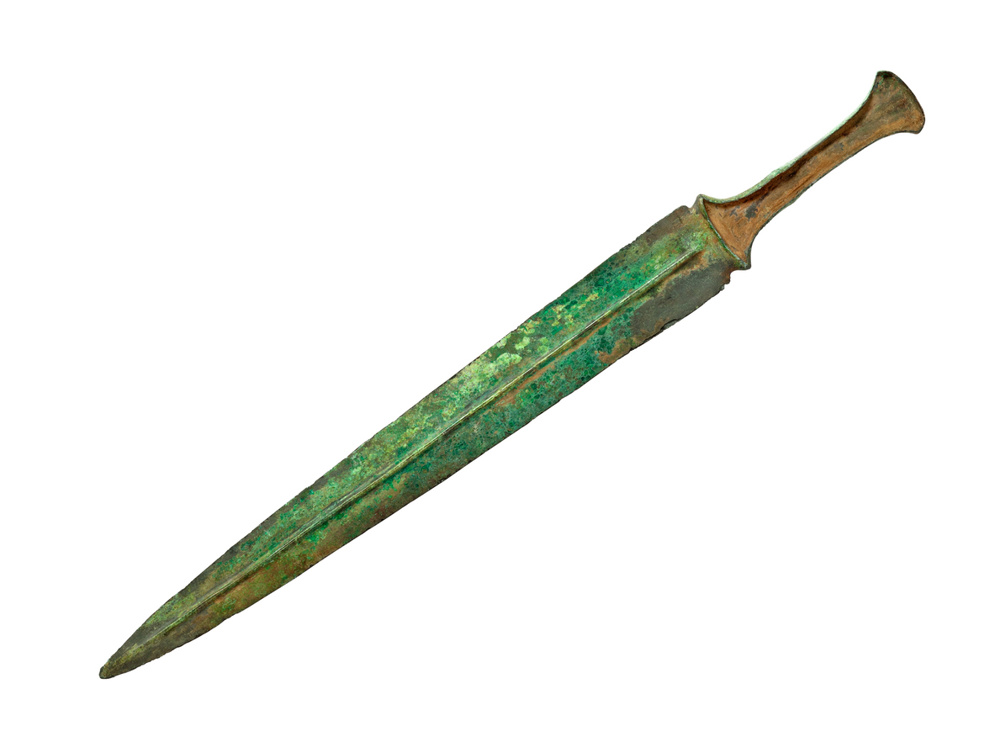
Bronze Age swords have a surprisingly rich history that goes far beyond simple early weapon design. They represent one of humanity’s first attempts to turn raw materials into precision tools for combat, status, and identity. The world’s oldest known swords, found at Arslantepe in Turkey and dating to around 3300 BCE, already show signs of intentional craftsmanship.
What makes these weapons fascinating isn’t just their age, but how much they reveal about early societies. Bronze’s castability allowed for complex shapes and designs that even early iron struggled to replicate. At the same time, the material’s limitations forced warriors to fight with control and precision rather than brute force.
How Bronze Age Swords Evolved From Stone Daggers
Before metalworking, stone daggers were the most advanced cutting tools available. But stone came with a critical limitation: fragility. Extending a stone blade increased the risk of snapping under pressure, which kept weapons short and highly controlled. This meant early combat relied on compact, manageable tools rather than extended reach.
The introduction of copper between 4000 and 2000 BC changed that trajectory. Copper was softer than stone but far more workable. It could be shaped, hammered, and refined, allowing blades to grow longer and more consistent. This marked the beginning of true blade evolution.
When bronze replaced copper—created by combining copper with tin or arsenic—everything accelerated. Bronze held an edge better, resisted wear more effectively, and could be cast into molds. This allowed smiths to move beyond simple dagger forms and experiment with longer blades that approached sword length.
The Oldest Known Swords and Where They Were Found
The earliest confirmed swords come from Arslantepe Mound in modern-day Turkey, where archaeologists uncovered a set of blades dating back to approximately 3300 BCE. These weren’t crude tools—they were carefully constructed weapons made from arsenic-copper alloys, measuring between 45 and 60 cm in length.
What stands out most is their sophistication. These swords featured defined grips, guards, and even pommel-like structures, indicating that early smiths already understood balance and handling. Some were decorated with silver inlays, suggesting they also held ceremonial or symbolic importance.
Additional discoveries, like the Kavak sword near ancient Trebizond, reinforce this region’s role in early sword development. Similar materials and construction techniques suggest that sword-making wasn’t isolated—it was part of a broader technological movement across Anatolia.
These finds matter because they challenge the assumption that early weapons were primitive. From the very beginning, swords were designed with both function and meaning in mind.
Leaf-Shaped, Carp's Tongue, and Other Bronze Age Blade Designs
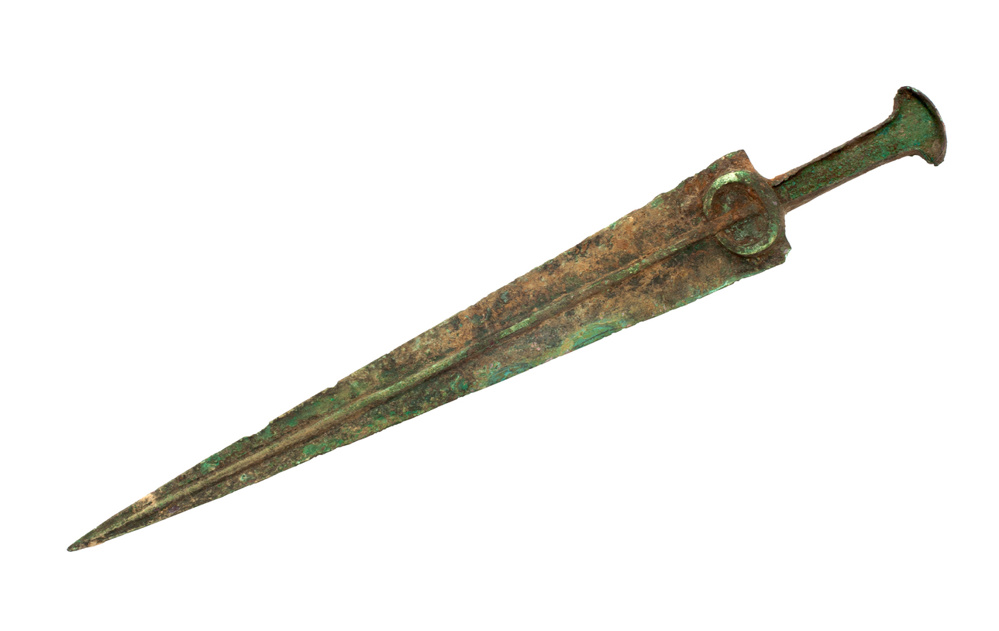
Bronze Age sword design was anything but static. Smiths experimented with shape, balance, and structure, creating a variety of blade forms adapted to different needs. The most iconic is the leaf-shaped blade, which widens toward the center before tapering to a point. This design concentrates force during a strike while maintaining agility.
It became dominant in Late Bronze Age Europe because it balanced cutting and thrusting effectively. Other variations, like the carp’s tongue design, featured narrower profiles optimized for speed and precision. These blades reflect a growing understanding of how shape influences performance.
Beyond combat, these designs also carried symbolic weight. Swords were often buried, offered, or displayed as markers of status. Their shape wasn’t just about efficiency—it was about identity. Owning a sword meant something, and its design communicated that meaning visually.
How Did Bronze Age Warriors Actually Use These Swords in Combat?
Wielding a bronze sword in combat demanded far more finesse than brute force. You'd rely on your shield first, delivering repeated shield bashes to knock opponents off balance and expose unprotected areas. Only then would you strike at targeted openings, thrusting and stabbing rather than swinging wildly.
At close quarters, blade control became everything. You'd use binding techniques to dominate your opponent's sword, locking blades to control their movement rather than clashing recklessly. Bronze's softness meant you couldn't afford blade-on-armor strikes or heavy direct blows without risking damage to your own weapon.
This wasn't improvised fighting. Analysis of 2,500 wear marks across 110 ancient swords confirmed consistent, practiced techniques. Regional styles even developed over centuries, proving Bronze Age warriors trained seriously and adapted their methods to bronze's unique limitations. The Bronze Age Combat Project created replica bronze swords and recruited university and museum experts to study these ancient battle damage patterns firsthand.
Were Bronze Swords Really as Fragile as People Think?
Shatter that assumption—bronze swords weren't the fragile, snap-prone weapons popular history makes them out to be. Combat archaeology tells a different story. Surviving blades show edge damage from direct blade-on-blade contact, proving they withstood real fighting before being discarded.
Bronze resilience comes down to material behavior and craftsmanship. Bronze bends under stress rather than shattering, much like early iron blades. Work-hardening during sharpening and use actually increased edge hardness, sometimes surpassing wrought iron. Modern tests confirm bronze edges achieve toughness comparable to steel chisels.
The brittleness you've heard about often reflects ground corrosion after centuries of burial, not original performance. With the right alloy and proper edge treatment, bronze swords were durable enough for Bronze Age combat—period. Bronze itself was created by mixing copper with tin, a combination that gave smiths meaningful control over the final hardness and flexibility of a blade.
Put your knowledge to the test with more fun sword and blade trivia.
What Bronze Alloys Were Used to Make Swords?
The performance of a bronze sword depended heavily on its alloy composition. Early examples used arsenical copper, which improved hardness and durability while also producing distinctive coloration. Over time, copper-tin bronze became the standard.
A typical mix of around 10% tin provided a balance between strength and flexibility. Increasing tin content made blades harder but also more brittle, creating a trade-off that smiths had to manage carefully. Some cultures, particularly in China, developed advanced casting techniques to address this. By combining a tough core with harder edges, they created blades that maximized both durability and sharpness.
These variations show that metallurgy wasn’t static. Ancient smiths understood their materials and adjusted compositions to meet specific needs, producing blades tailored to both combat and cultural expectations.
Casting vs. Hammering: How Bronze Age Swords Were Made
Once molten bronze hit the mold, a sword's fate was sealed. Swordsmiths poured liquid bronze into preheated, two-part soapstone molds clamped upright in wooden rigs. After cooling, they extracted the blade with pliers and quenched it in water.
Workers then hacksawed off the sprue, twisted away excess seepage, and refined the surface through filing, grinding, and sanding until it reached a mirror polish. Casting limitations, however, were real. You couldn't control heat distribution the way forging allowed, so creating a flexible spine with a hardened edge wasn't possible. Bubbles and embedded imperfections were common.
Forging advantages were clear: forged blades came out sharper and structurally stronger. Bronze Age smiths worked within these constraints, producing functional weapons despite the process's inherent boundaries. Some modern reconstructions of these techniques, such as the workshop at Flag Fen roundhouse, demonstrated that a fully cast and finished bronze sword could be completed by a single participant within a single weekend.
How Bronze Age Swords Compare to Early Iron Blades
When iron emerged, it didn’t immediately outperform bronze in every category. High-quality bronze could hold a sharper edge and resist corrosion better than early iron, especially in environments where moisture would quickly degrade untreated metal. In fact, some of the finest bronze blades from the late Bronze Age were highly refined, benefiting from centuries of accumulated metallurgical knowledge.
But iron introduced something bronze couldn’t match: adaptability. While bronze relied on casting, iron could be forged, reheated, reshaped, and repaired multiple times. This fundamentally changed how weapons were used and maintained. A damaged bronze sword might need to be recast entirely, while an iron blade could be reforged and returned to service. That difference alone made iron far more practical in sustained warfare.
Iron’s toughness also reshaped combat behavior. Instead of carefully avoiding heavy contact, warriors could strike more aggressively, parry more confidently, and rely on their weapon to survive repeated impacts. This opened the door to new fighting styles, longer blades, and more forceful engagements. The material didn’t just change weapons—it changed how people fought.
Why Bronze Age Swords Still Fascinate Modern Audiences
Bronze Age swords continue to capture attention because they sit at the beginning of something recognizable. They’re not crude tools, but they’re not yet refined into the highly engineered weapons of later eras. That in-between state makes them uniquely compelling—they represent the moment when humans first began to fully understand what a sword could be.
There’s also an element of visible craftsmanship that modern audiences instinctively appreciate. Bronze blades often feature clear casting lines, symmetrical shapes, and deliberate proportions that reveal the maker’s intent. You can see the decision-making in the object itself, which creates a stronger connection between the tool and the person who created it.
The sense of mystery adds another layer. Unlike later steel traditions, where techniques were documented and refined over centuries, Bronze Age metallurgy still leaves unanswered questions. How consistent were alloy mixtures? How standardized were molds? How much variation existed between regions? These unknowns keep the subject open-ended, inviting ongoing exploration.
Why Ancient Weapons Still Feel Relevant in Modern Culture
Ancient weapons like Bronze Age swords remain relevant because they represent a direct, unfiltered relationship between human and tool. There’s no intermediary system, no automation—just the object and the person using it. That simplicity creates a level of immediacy that modern technology often lacks.
This is especially important in storytelling. Swords require proximity, timing, and control. They make conflict personal. When two characters engage with swords, the outcome depends on skill, awareness, and decision-making in real time. That dynamic is far more engaging than distant or automated forms of conflict.
There’s also a symbolic dimension. Ancient weapons often represent identity, status, or personal capability. A sword isn’t just something a character uses—it becomes part of how that character is understood. This symbolic role has carried forward into modern media, where weapons often reflect personality, background, or growth.
Conclusion
Bronze Age swords are more than early experiments in weapon design—they are the foundation of everything that followed. They represent the first time humans combined material science, craftsmanship, and combat strategy into a single object.
Their influence extends beyond history. They shaped how swords evolved, how they were used, and how they are understood today. Even in modern media, their legacy continues through design, symbolism, and storytelling. What makes them enduring isn’t just their age—it’s what they represent: the beginning of a long relationship between humans and the tools they create to define power, identity, and survival.